3 Debt repayment strategies to pay off debt faster
Debt repayment can feel overwhelming, but the right strategy can help you make steady progress towards becoming debt free. Whether you’re managing credit card debt, personal loans or other repayments, choosing a debt repayment method that suits your circumstances can help you reduce debt faster and stay motivated along the way.

At MyBudget, we’ve helped thousands of people reduce debt, regain control of their money and build a stronger financial future. Many people find themselves in more debt than they expected because it’s often much easier to borrow money than it is to pay it back. In this article, we’ll explore three proven debt repayment strategies and help you decide which one may work best for you.
What are the best debt repayment strategies?
The best debt repayment strategy is the one you can stick with consistently. A realistic budget is a great place to start, but it also needs to suit your lifestyle, financial circumstances and long-term goals.
The three most common debt repayment strategies are:
- The Avalanche Method
- The Snowball Method
- The Feel Good Method.
What is the Avalanche Method?
The Avalanche Method focuses on paying off your highest-interest debt first while continuing to make the minimum repayments on all your other debts.
This approach targets the debts costing you the most in interest, such as credit cards, store cards, revolving credit facilities and high-interest short-term loans.
Once your highest-interest debt is repaid, you redirect those extra repayments towards the debt with the next highest interest rate, continuing the process until all your debts are cleared.
The biggest advantage of the Avalanche Method is that it reduces the total amount of interest you pay over time. However, because larger debts can take longer to pay off, it may not provide the quick wins some people need to stay motivated.
What is the Snowball Method?
The Snowball Method focuses on paying off your smallest debt first, regardless of its interest rate.
While continuing to make the minimum repayments on all your other debts, you put any extra money towards your smallest balance. Once that’s paid off, you roll those repayments into the next smallest debt, building momentum as each balance disappears.
Many people find this method motivating because they see regular progress, close accounts they no longer need and build confidence with every debt they eliminate.
If staying motivated is important to you, the Snowball Method can make it easier to stick with your debt repayment plan over the long term.
What is the Feel Good Method?
The Feel Good Method prioritises paying off the debt that will give you the greatest sense of relief, regardless of the balance or interest rate.
While continuing to meet your minimum repayments on your other debts, you focus any extra money on the debt that’s causing you the most stress. Once that’s gone, you move on to the next debt that will make the biggest positive difference to your peace of mind.
Money isn’t just about numbers. Sometimes the debt that’s causing the greatest emotional burden isn’t the one costing the most in interest. It could be money you owe a family member or friend, or a debt that’s been weighing on your mind for months.
For some people, reducing financial stress is just as important as reducing interest costs, making this a powerful strategy for staying motivated.
What can cause financial stress?
Financial stress can be caused by any debt that’s difficult to repay, especially when repayments, interest and everyday living costs start competing for your income.
Credit card debt is one of the most common causes of financial stress because high interest rates can make balances difficult to pay off. At the same time, rising mortgage repayments and the increasing cost of living have placed added pressure on many New Zealand households.
It’s not just credit cards or home loans that can cause financial stress. Car loans, personal loans, Buy Now, Pay Later services, interest-free finance and even borrowing from family or friends can become overwhelming if repayments become difficult to manage.
The earlier you take action, the easier it can be to regain control of your finances. Creating a realistic budget and prioritising your repayments can help reduce financial stress and put you on the path towards becoming debt free.
How did Megan and Creagh get out of debt?
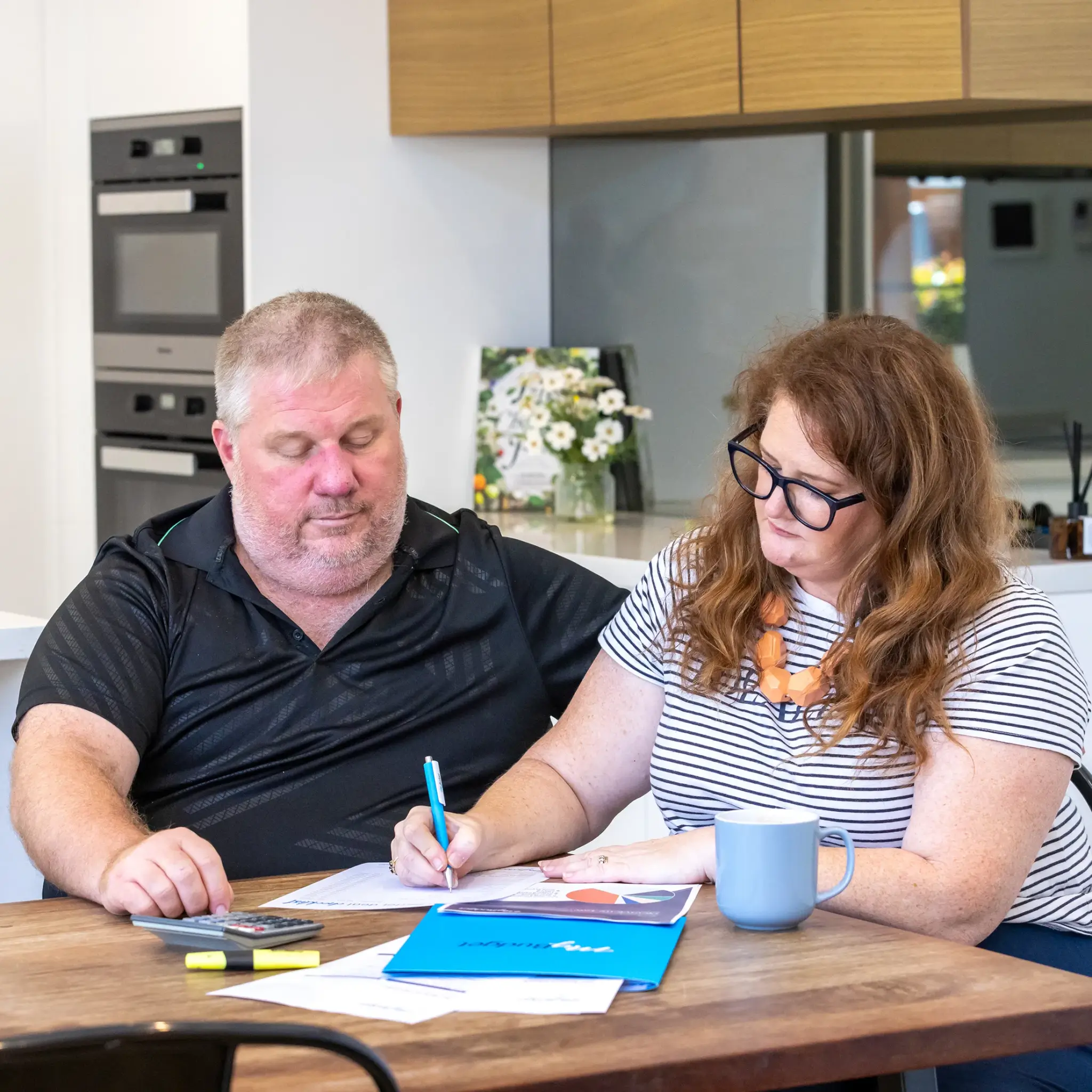
Megan and Creagh reduced their debt by following a personalised budget and debt repayment strategy that suited their goals and lifestyle.
Megan and Creagh are a married couple in their 30s with steady jobs. Like many households, they gradually relied more on credit cards until their balances became overwhelming. By the time they asked for help, they had accumulated around $91,000 in credit card debt.
Their story shows that with the right debt repayment strategy and a personalised budget, it’s possible to understand where your money is going, plan ahead and work towards becoming debt free with confidence.
How did they become trapped in credit card debt?
Small everyday spending decisions gradually added up to a level of debt they could no longer manage.
“It wasn’t big lavish expenses that got us into trouble. It was day-to-day stuff,” says Creagh.
The couple regularly overspent on small purchases, such as eating out instead of cooking at home. When their balances became difficult to manage, they moved their debt between credit cards using promotional balance transfer offers, only to end up with multiple cards and growing balances.
“What we were doing wasn’t working and we weren’t sure how to get out of debt,” says Megan.
How did MyBudget help?
MyBudget created a personalised budget that helped Megan and Creagh organise their money, make extra repayments and reduce their debt faster.
A MyBudget Money Coach reviewed their finances and created a personalised budget that mapped out their income, bills, debt repayments and financial goals over the next 12 months.
They were surprised by how much progress they could make once they understood exactly where their money was going. Their new budget created opportunities to make extra repayments while still covering everyday expenses and unexpected costs.
Instead of feeling overwhelmed, they had a clear plan they could follow with confidence.
What results did they achieve?
Within 10 months, Megan and Creagh paid off around $60,000 in debt and five credit cards.
Their debt repayment strategy combined elements of the Avalanche, Snowball and Feel Good methods to create a plan that suited their circumstances.
They didn’t have to give up everything they enjoyed. Instead, they learned how to spend within their budget while continuing to work towards their financial goals.
Today they still enjoy eating out, but their spending has clear limits. They know exactly where their money is going, when they’ll achieve their goals and they’re now saving towards a house deposit.
“I’m so proud of us and what we’ve done together. It’s a feeling of elation. I can breathe out,” says Megan.
Ready to pay off debt faster?
If you’re struggling with debt or finding it difficult to make extra repayments, MyBudget can help. We’ll create a personalised budget that gives you a clear plan to reduce debt, pay less interest and achieve your financial goals sooner.
Or call 09 849 6285 today to get started.

Support that changes everything
Megan and Creagh were drowning in debt. With MyBudget’s help, they cleared five credit cards.
This article has been prepared for information purposes only, and does not constitute personal financial advice. The information has been prepared without taking into account your personal objectives, financial situation or needs. Before acting on any information in this article you should consider the appropriateness of the information having regard to your objectives, financial situation and needs.
Related Articles


How to get out of debt and save | Megan & Creagh’s client journey
- Success Stories
8 min read

10 Steps to Get Out of Debt eBook
Start your MyBudget journey
Imagine where your finances could be 12-months from now.
- Initial 10-minute chat
- Private & confidential
- No long-term, lock-in contracts.
Related Articles

What to do when you can’t pay your bills: strategies to take control
- Debt Help
9 min read

How to get out of debt and save | Megan & Creagh’s client journey
- Success Stories
8 min read